Why Fans Who Watch From Home End Up Caring More Than the Ones Who Were Actually There
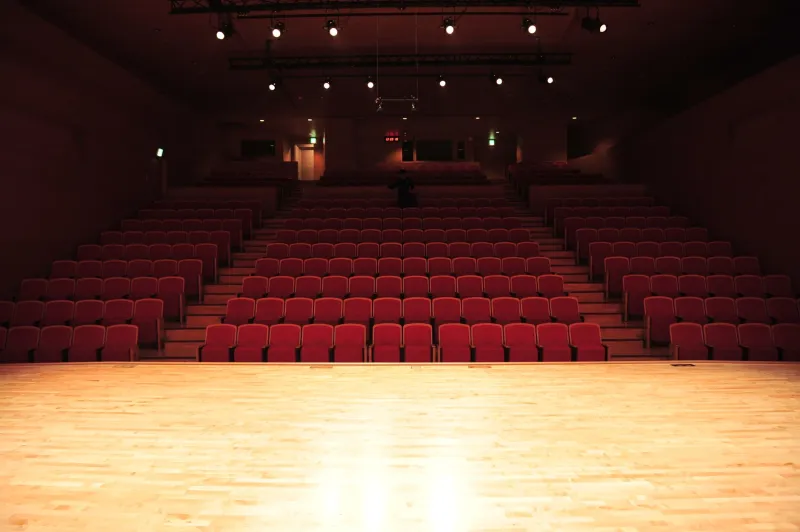
There's a moment that happens to almost everyone who attends a big live event. You're standing in the crowd, the performer is right there, and somewhere in the back of your mind a quiet thought surfaces: I'm not sure I'm feeling this the way I thought I would. The lights are too bright. The sound is muddy. The person next to you smells like a hot dog and ambition. You paid three hundred dollars for this.
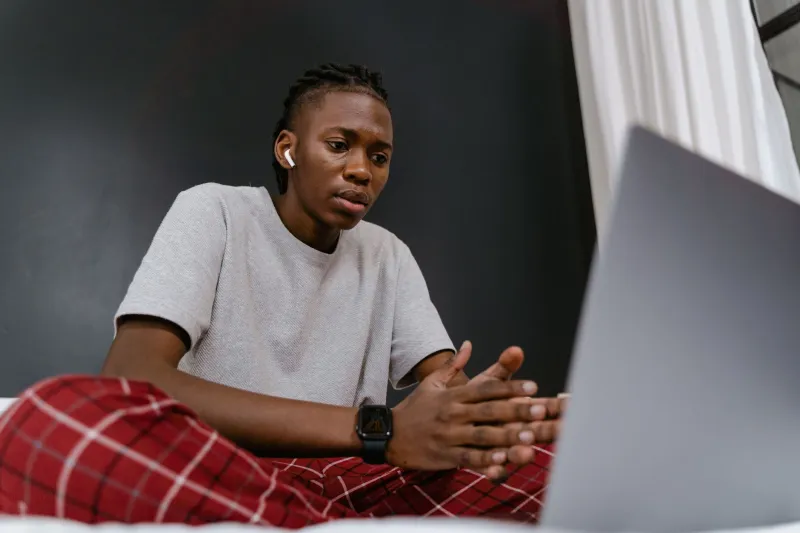
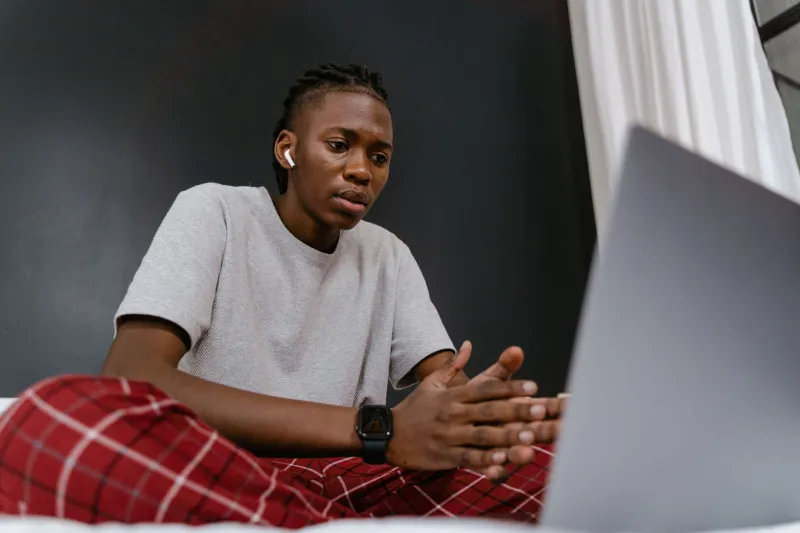
Meanwhile, someone watching from their sectional in Columbus, Ohio is crying at the exact same performance.
That gap — between the person who was physically present and the person who logged in — has become one of the most fascinating puzzles in entertainment psychology. And the answer, it turns out, says a lot about why virtual events aren't just a pandemic-era workaround. They might actually be a superior vehicle for emotional connection.
The Myth of Physical Presence
We've been told for decades that being there is everything. There's a whole economy built around that belief — ticket premiums, VIP packages, travel budgets. But presence and attention are two completely different things, and live events are surprisingly bad at guaranteeing the second one.
When you're in a venue, your brain is doing a lot of work that has nothing to do with the performer. You're navigating social dynamics, managing physical discomfort, tracking where your friends went, and processing a dozen sensory inputs competing for bandwidth. Psychologists call this cognitive load, and it quietly eats into your capacity for emotional absorption.
At home, most of that noise disappears. You control the environment. You can sit exactly how you want, at whatever volume feels right, with whoever — or no one — you choose. That reduction in friction clears a direct path between the content and your emotions.
Replay Is Not a Consolation Prize
Here's where virtual events pull ahead in a way that live experiences simply can't match: the ability to return.
When a moment hits you during a live show, it's gone. You carry it with you, but you can't revisit it. The memory fades and distorts. With a recorded or archived virtual event, that moment is waiting for you. You can go back the next morning. You can share it with someone. You can watch it again when you need it.
That repeatability fundamentally changes your relationship with the content. Psychologists who study memory and attachment have long noted that repeated exposure to emotionally resonant material deepens the bond we feel with it. It's the same reason people rewatch their favorite movies or replay certain albums on a loop during meaningful moments in their lives. The content becomes woven into the fabric of personal history.
For creators, this is enormous. A virtual performance doesn't end when the stream does. It keeps doing emotional work for weeks, sometimes years, after the fact.
The Intimacy Equation
There's something else happening in home viewing that's hard to quantify but impossible to ignore: the sense that the performer is speaking directly to you.
In a venue, you're one of thousands. The performer's gaze sweeps the room, hits the lights, and lands somewhere in the general direction of the crowd. Online, that same performer is on your television, or your laptop, or your phone — a device you use for your most private communications, your closest relationships, your quietest moments. The psychological framing is completely different.
Creators who understand this have started leaning into it deliberately. They speak to the camera like they're talking to one person. They share things they'd never say into a stadium mic. They create the sensation of a one-on-one exchange even when tens of thousands of people are watching simultaneously. It's a kind of engineered intimacy, and audiences respond to it at a gut level.
Some of the most loyal fan communities in entertainment right now — the ones who show up for every drop, who evangelize to their friends, who stick around for years — are built almost entirely on digital-first relationships.
Why Smart Performers Are Doubling Down on Digital
As in-person events have come roaring back, a lot of observers assumed virtual would shrink back into a niche. That hasn't happened — at least not for the creators paying attention to where real loyalty is being built.
Performers who built genuine digital audiences during the years when streaming was the only option noticed something: those fans behaved differently. They were more engaged, more likely to purchase, more likely to recruit new followers, and more emotionally invested in the creator's success. The virtual relationship had created something that a single live event rarely does — continuity.
Live events are episodic. You go, you experience something, and then there's a gap until the next tour, the next conference, the next show. Virtual content, by contrast, can be ongoing. A creator who streams regularly, who archives their work, who makes their audience feel like insiders rather than ticket-holders, is building something that compounds over time.
That's why you're seeing so many performers and event organizers treat their digital presence not as a marketing tool for their live shows, but as a primary product in its own right.
The Asynchronous Advantage
One of the underrated features of virtual events is that they don't require everyone to show up at the same time. Asynchronous access — the ability to watch when it works for you — removes one of the biggest barriers to deep engagement.
When someone has to carve out a specific evening and make it work around their schedule, their job, their kids, and their commute, they're already spending emotional capital just to show up. When they can watch at 11pm on a Tuesday because that's when their brain finally quiets down, they're arriving on their own terms. That autonomy translates directly into how they receive the experience.
And here's the counterintuitive part: watching something on your own schedule often makes it feel more personal, not less. The choice to press play is an active decision. It signals something about what matters to you. That agency creates ownership, and ownership creates loyalty.
What This Means for the Future of Fan Culture
Fan culture has always been about more than a single experience — it's about identity, community, and repeated emotional investment over time. For most of entertainment history, live events were the peak expression of that investment. They were the proof of devotion.
But the infrastructure of virtual fandom has quietly gotten more powerful. The communities that form around digital events — in Discord servers, comment sections, fan forums — are often more sustained and more active than anything a single live show generates. People who met in a virtual event chat are still talking to each other years later.
None of this means live events are going away. They're not, and they shouldn't. There's real value in shared physical space, in the energy of a crowd, in the particular electricity of being somewhere together. But the idea that in-person automatically means deeper connection? That's a story we told ourselves before we had the data.
The fans who feel the most are often the ones who watched from home.