Strangers in Your Living Room: The Unexpected Vulnerability of Logging Into a Virtual Event
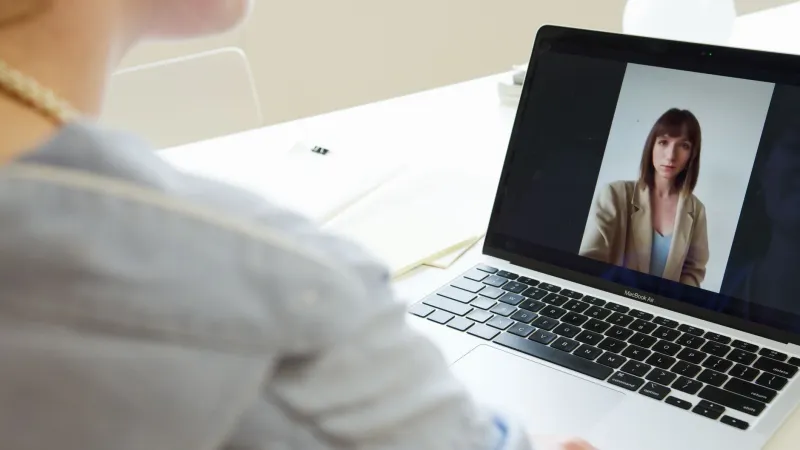
There's a moment that almost every virtual event attendee knows. You click the link, your camera flips on, and suddenly you're staring at a grid of strangers — and they're staring right back. Not at the back of your head. Not at your profile from forty rows away. Straight at your face, your bookshelf, your laundry pile you forgot to move out of frame. For a format that was supposed to feel less personal than a live venue, virtual events have a funny way of making you feel completely exposed.
This isn't just an aesthetic annoyance. There's something genuinely disorienting about the intimacy that digital events create — often without anyone asking for it.
The Crowd That Never Hides You
Think about what it actually feels like to attend a concert or a conference in person. Even in a small venue, you have the crowd working in your favor. You're one face among hundreds. Nobody's zooming in on your expression when the opening act falls flat. Nobody can see that you're checking your phone or quietly judging the keynote speaker's slide design. Physical spaces offer a kind of social camouflage that we rarely stop to appreciate — until it's gone.
Online, that camouflage evaporates. Depending on the platform and the event format, you might find your face tiled alongside a dozen others, your reactions visible to everyone in the room. Yawn at the wrong moment? Someone saw it. Glance away from the screen? The host noticed. The anonymous buffer that a physical crowd provides doesn't exist in a Zoom grid or a video conference panel.
Psychologists call this heightened self-awareness under surveillance — and it's exhausting. When we know we're being watched, we monitor ourselves constantly, which pulls cognitive energy away from actually engaging with whatever we came to experience.
Your Home Is the New Stage
Here's where it gets really interesting. In a traditional event setting, you choose what you bring into that space. You pick your outfit, decide whether to wear a lanyard, grab a seat in the back if you want distance. The venue is neutral ground — it belongs to everyone and no one.
But your home? That's a different story entirely.
When you log into a virtual event from your apartment, your bedroom, or your kitchen table, you're involuntarily inviting strangers into one of the most personal spaces you occupy. The background behind you isn't just a backdrop — it's a biography. Family photos, the specific way your books are arranged, the brand of coffee maker sitting on your counter. These details communicate things about you that you never consciously chose to share.
Researchers studying digital communication have found that people experience significantly more anxiety about background visibility than they do about their own facial expressions during video calls. We're deeply aware that our spaces are being read, even when nobody says a word about it. A packed auditorium never asked you to bring your living room along.
The Camera Angle Problem
There's also something uniquely unsettling about the geometry of video feeds. In person, eye contact is a social negotiation — you can look away, shift your gaze, let it drift naturally. On a screen, the camera is fixed. The angle is often slightly off, creating that uncanny sensation that someone is perpetually almost looking at you but not quite. Or worse, the setup is so direct that it feels like a stare you can't escape.
Close-up video feeds amplify this effect. Faces fill the frame at a proximity that, in real life, would be reserved for intimate conversations — the kind you have with close friends or family, not with 200 strangers attending a digital marketing summit. Our brains haven't fully caught up to the idea that this closeness is artificial. We still process it emotionally as if it were real physical proximity, which triggers a low-grade discomfort that's hard to shake.
This is part of why some attendees feel oddly drained after virtual events that should have been relaxing. The intimacy isn't chosen — it's imposed by the format itself.
Why We Don't Feel This Way at the Mall
It's worth pausing on a comparison that makes this paradox sharper. Shopping malls, airports, sports arenas — these are all spaces where strangers observe each other constantly, and yet most people don't find them invasive. The difference comes down to consent and context.
In a shared physical space, the social contract is understood. Everyone is equally exposed to the environment. Nobody has a special vantage point. But in a virtual event, the technology creates asymmetries. A presenter with a high-quality camera and ring light has a very different experience than an attendee joining from a dimly lit spare room on a laptop webcam. The host can see you; you might not be able to see them clearly. The platform can record without you always being certain of it. These imbalances quietly erode the sense of safety that physical shared spaces tend to provide.
Finding Your Comfort Zone in a Format That Wasn't Designed for It
None of this means virtual events are inherently bad — far from it. The accessibility they offer is genuinely transformative, letting people attend experiences they'd never be able to reach otherwise. But understanding why they sometimes feel unexpectedly invasive is the first step toward navigating them on your own terms.
A few things that actually help: turning off your self-view so you're not watching yourself be watched. Using a simple, intentional background — not to hide your space, but to give you control over what you're sharing. Choosing events that don't require camera-on participation when you need a lower-stakes experience. And giving yourself permission to step away from the screen briefly without guilt, because the hypervigilance that video formats trigger is real and it compounds over time.
Virtual platforms are still figuring out how to balance access with comfort. Some are experimenting with avatar-based participation, audio-only modes, and more flexible camera policies. The best ones treat attendee autonomy as a design feature, not an afterthought.
Until the format catches up with the psychology, knowing what's actually happening — that your brain is processing a close-up grid of strangers as something fundamentally more intimate than a crowd ever was — at least gives you something to work with. You're not being oversensitive. The living room really is a strange place to share with the internet. And it turns out, that matters more than anyone expected.