Performing for Thousands Feels Easier Than Speaking to Ten — Here's the Psychology Behind It
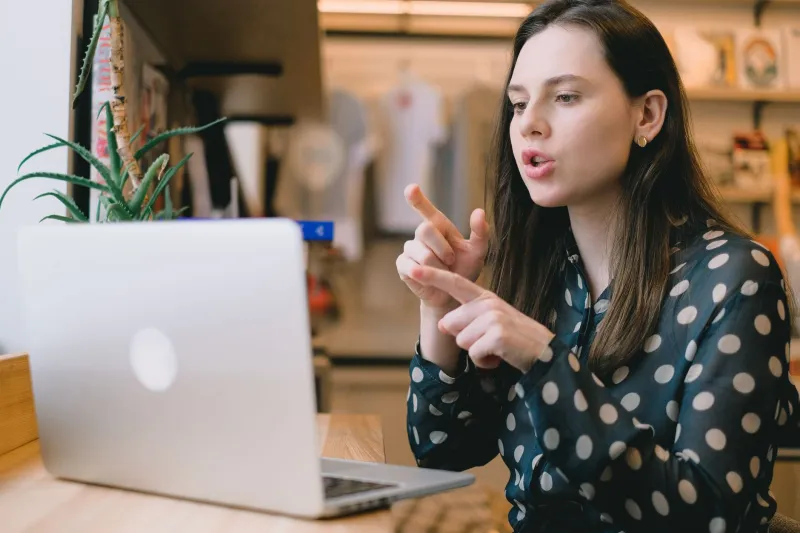
Ask anyone who's presented at a virtual conference or performed a live-streamed set in the last few years, and you'll probably hear some version of the same confession: it was way less terrifying than I expected. Not just manageable — actually freeing. Which is strange, right? Thousands of people watching you from their living rooms, and somehow that feels less exposing than a conference room with twelve colleagues staring back at you.
This isn't a coincidence. It's psychology.
The Invisible Audience Effect
Social anxiety is, at its core, a response to perceived evaluation. The moment you sense someone forming a judgment about you in real time — reading your body language, clocking your nervous hands, watching your eyes dart around — your nervous system kicks into high gear. In-person rooms are basically anxiety machines. Every cough, every tilted head, every whispered aside sends your brain into overdrive trying to decode what people are thinking.
Virtual environments short-circuit a lot of that.
When you're presenting through a camera, your audience becomes abstract in a very specific way. You know they're there, but you can't feel them the way you would in a physical room. That gap — the screen between you and them — acts like a psychological buffer. Researchers sometimes call this the "online disinhibition effect," a term coined by psychologist John Suler. While that phrase often gets applied to why people say wild things in comment sections, the same mechanism works in reverse for performers: the reduced social feedback loop actually calms the nervous system rather than triggering it.
You Control the Frame
Here's something that doesn't get talked about enough: in a virtual event, you own your environment in a way you never could on a physical stage.
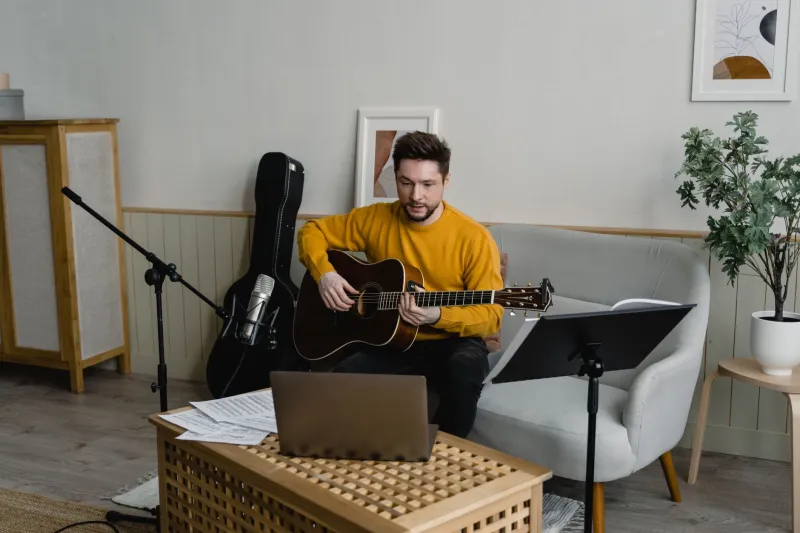
You control the lighting. You control the camera angle. You decide what's in the shot and what isn't. If you want the camera slightly above eye level to feel more confident, you can do that. If soft side lighting makes you look and feel more at ease, you can set that up before you go live. That level of control is something even seasoned performers rarely get in traditional venues.
This matters psychologically because a significant chunk of stage fright comes from feeling exposed and powerless. Virtual setups quietly hand some of that power back. When a speaker chooses their background, adjusts their ring light, and frames themselves the way they want to be seen, they're not just managing aesthetics — they're building a sense of agency that carries over into how they actually perform.
Several coaches who work with speakers on virtual presentations have noted that clients who struggled with confidence in person often bloom on camera. The self-editing that happens naturally when you can see your own face in the corner of the screen — what researchers call "mirror exposure" — actually helps people regulate their expressions and feel more in control of their presentation.
The Audience Knows Less Than You Think
In a physical room, your audience sees everything: the sweat on your forehead, the fact that your hands are trembling slightly, the moment you lose your place and glance at your notes. Online, most of that disappears. A tight camera frame hides a lot. Your voice might shake, but nobody can see your knees.
This isn't about deception — it's about reducing the performance load. When you're not managing every inch of your physical presence, you free up mental bandwidth to actually focus on what you're saying. The result is often a more authentic, connected delivery. Paradoxically, the technology that puts distance between you and your audience can make what you're saying feel more genuine.
That's the intimacy paradox in full effect. Fewer physical signals, more emotional presence.
When the Chat Becomes Your Co-Pilot
One thing that surprises a lot of first-time virtual presenters is how much they end up loving the live chat. In a conference room, audience reaction is a silent, ambient thing — you're reading faces, sensing energy shifts, trying to gauge whether people are engaged or just being polite.
In a virtual event, the audience talks back in real time through text. And for many speakers and performers, that running stream of comments, reactions, and questions becomes an unexpected source of confidence. You can see "this is so good" scroll by and actually absorb it. You can spot a question that tells you people are tracking with you. The feedback loop, instead of being overwhelming, becomes a kind of low-stakes conversation.
Not everyone manages the chat well — that's a skill set of its own — but for performers who find silence terrifying, the active chat window is like having a warm, responsive crowd rather than a passive one.
What This Means for How We Show Up
The broader implication here is worth sitting with for a minute. Virtual events have functioned, unintentionally, as a kind of accessibility ramp for people who were previously locked out of public performance or professional visibility by anxiety.
Public speaking is consistently ranked as one of Americans' greatest fears. But the virtual format has allowed people who might have avoided panels, presentations, or live performances altogether to step into those roles — and discover they're actually good at them. That's a genuine cultural shift.
At Romeria Virtual, we've watched this play out in real time: creators who had never streamed a thing in their lives finding their voice in a digital room, speakers who dreaded conference seasons suddenly thriving in webinar formats. The screen didn't just move the stage — for a lot of people, it lowered the stakes just enough to finally get on it.
And that might be the most interesting thing about where virtual events are headed. Not just as a convenience or a cost-saving measure, but as an environment that genuinely changes how people relate to being seen.