Front Row for Everyone: Why the Living Room Is Winning the Venue Wars
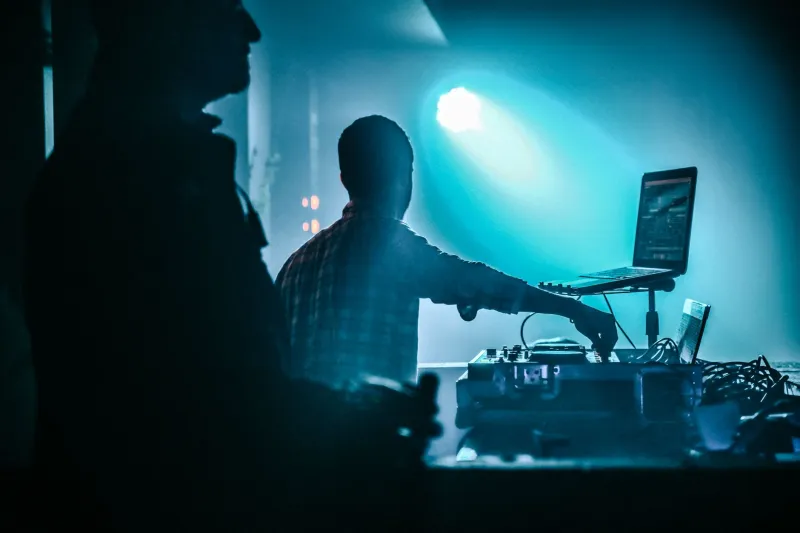
There's a moment every concert veteran knows well. You've paid a small fortune for tickets, fought traffic, stood in a line that wraps around the block, and finally made it inside — only to spend the next two hours squinting at a stage the size of a postage stamp from somewhere in section 400. You can hear the music. Technically, you're there. But there doesn't always feel like much.
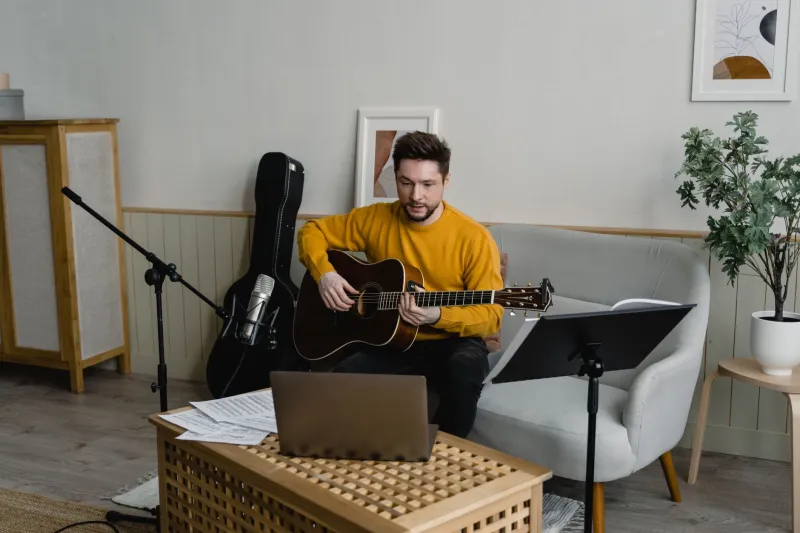
Now flip that. You're on your couch, your favorite snack is within arm's reach, and the performer you've followed for years is framed perfectly on your screen — close enough that you can read their expression. No $18 beers. No elbow wars with strangers. No wondering whether the person in front of you is going to stand up for the entire show.
This isn't a hypothetical. For millions of Americans, this became reality in 2020, and the experience stuck. Virtual events didn't just fill a gap during a rough stretch — they exposed something audiences didn't know they were missing.
The Geography Problem Nobody Talked About
For decades, the entertainment industry quietly sorted fans into tiers based on zip code. If you lived in New York, Los Angeles, or Chicago, you had access to world-class live events on a regular basis. If you lived in rural Montana or a mid-sized city in the Midwest, you caught whoever happened to pass through on tour — maybe twice a year, if you were lucky.
Virtual events blew that system wide open. A kid in Boise got the same seat as someone in Brooklyn. A fan in rural Tennessee had identical access to a sold-out digital premiere as someone living two blocks from the venue. Geographic gatekeeping, which had been baked into live entertainment for generations, suddenly had no mechanism to enforce itself.
The ripple effects of that shift are still being felt. Creators who built their audiences online discovered that their most passionate fans weren't necessarily clustered in major metros. Event producers realized that their potential audience wasn't a few thousand people in driving distance — it was anyone with a decent internet connection and a reason to care.
What the Research Says About Digital Closeness
Here's where things get genuinely interesting. Psychologists who study parasocial relationships — the one-sided emotional bonds people form with public figures — have found that screen-based interaction often deepens those connections in ways that physical proximity doesn't automatically replicate.
When you're watching a performer on a massive stadium screen, you're not actually seeing them any better than you would on a well-produced livestream. The camera is doing the work either way. But in a virtual setting, the framing, pacing, and production choices are designed specifically for the viewer at home. Eye contact — even simulated through a camera lens — registers differently in your brain than a distant figure on a lit stage.
Several studies on audience engagement have noted that viewers who participate in interactive virtual events report stronger feelings of connection to performers than passive stadium attendees. The act of sending a message, reacting in real time, or seeing your username acknowledged creates a feedback loop that a 70,000-seat arena simply can't replicate at scale.
Production Quality Changed the Expectations Game
Early virtual events were rough around the edges — shaky cameras, audio that cut in and out, interfaces that crashed under load. But producers learned fast, and the bar rose quickly. By the time platforms and creators figured out what they were doing, digital productions started offering things that physical venues structurally cannot.
Multiple camera angles. On-screen graphics and real-time data. Instant replay. Curated setlists that account for pacing in a way that touring logistics often prevent. Behind-the-scenes content woven directly into the experience. Commentary tracks. Closed captioning without the weird delay.
For a significant segment of the audience — including people with disabilities, social anxiety, or sensory sensitivities — virtual formats didn't just offer convenience. They offered access that had previously been conditional at best.
The Loyalty Shift Creators Are Noticing
Talk to event producers and artists who've built robust digital presences, and a pattern emerges. The fans who show up for virtual events aren't passive. They're engaged, they're vocal, and they tend to stick around between events in ways that differ from traditional live audiences.
Part of this comes down to the architecture of digital platforms. When an event ends at a stadium, everyone disperses. When a virtual event wraps up, the community infrastructure — the Discord servers, the comment threads, the follow accounts — remains active. The energy doesn't dissipate the same way.
Creators who've leaned into this dynamic have found that virtual events function less like one-off performances and more like relationship touchpoints. Each stream or digital gathering reinforces a bond that compounds over time.
Does This Mean Physical Events Are Finished?
Not even close. There are experiences that require physical presence — the shared energy of a crowd, the acoustics of a great room, the spontaneous human moments that no production team can script. Live events aren't going anywhere, and plenty of fans will always prioritize them.
But the either/or framing misses the point. What's actually happening is more nuanced. Audiences are developing a more sophisticated vocabulary for what they want from different kinds of events. They're choosing virtual not because it's a substitute, but because it's a distinct experience with its own set of advantages — and increasingly, they're making that choice intentionally rather than by default.
The venue paradox isn't really a paradox at all. It's just the market catching up to something fans figured out the first time they watched a concert from their couch and realized they could actually see the performer's face.
That's not a consolation prize. That's a feature.