Screen to Soul: The Surprising Reason Your Couch Might Be the Best Seat in the House
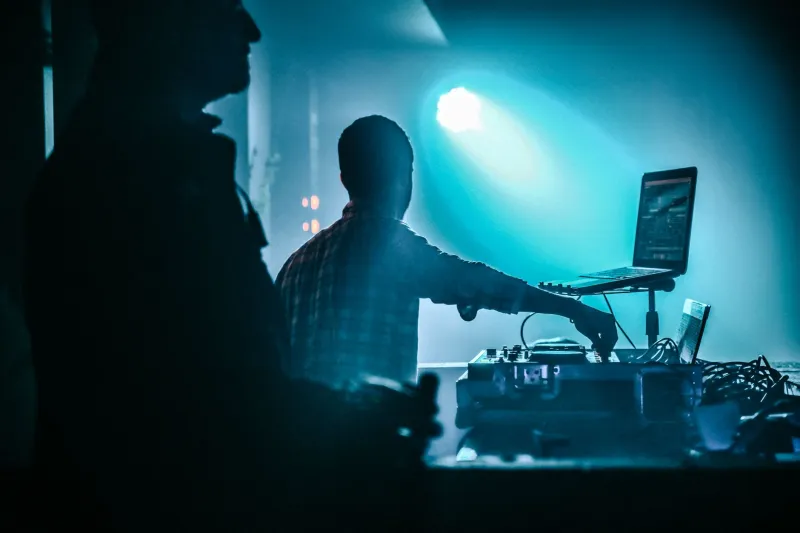
Let's be honest. The conventional wisdom has always been that live music is about the crowd, the sweat, the shared electricity of thousands of strangers losing their minds together. And yet — ask someone who caught a virtual concert in 2020 and beyond, and you'll hear something unexpected. Something that doesn't quite fit the script.
"I cried harder watching her perform from my laptop than I did at her arena show two years earlier," says Danielle, a 31-year-old teacher from Austin, Texas, describing her experience watching a streamed acoustic set. "And I was sitting in my pajamas."
She's not alone. Across the US, fans who've experienced both formats are reporting something counterintuitive: the digital stage can hit differently — and sometimes deeper — than the real thing. So what's actually going on here?
The Camera Doesn't Lie (And It Gets Closer Than You Ever Could)
At a stadium show, unless you've shelled out for front-row tickets or you're tall enough to see over everyone else, your view of the performer is roughly the size of a thumbnail. You're watching a tiny figure on a massive stage, mediated by massive screens that ironically look a lot like... a video stream.
Virtual concerts flip that equation entirely. Producers behind successful digital events have figured out that intimacy is a camera angle decision. Close-up shots of a musician's hands on guitar strings, the micro-expressions during a bridge, a bead of sweat on a brow mid-chorus — these details are invisible from row 47 of a sold-out arena but are front and center in a well-produced virtual show.
"We think about virtual proximity constantly," says one independent concert director who has produced digital events for mid-size artists. "The camera is your ticket. And we can give every single viewer a front-row seat, which is physically impossible in any brick-and-mortar venue."
That manufactured closeness isn't fake — it triggers genuine neurological responses. Researchers in social psychology have long documented that perceived physical proximity increases feelings of emotional connection. When a performer appears to be looking directly into your eyes through a screen, your brain doesn't fully distinguish that from the real thing.
Your Space, Your Rules
Here's another factor that rarely gets talked about: environment control. At a traditional concert, you're in someone else's space. The sound is calibrated for the room, the lighting is designed for the back row, and you're competing with 20,000 other people for emotional bandwidth.
At home, you control all of it. You've got your speakers dialed in, your lighting exactly how you like it, and zero strangers elbowing you during the slow songs. There's something to be said for experiencing music in the space where you actually live your emotional life — your bedroom, your living room, the kitchen where you've danced by yourself at midnight.
Jamie, a 26-year-old from Chicago, put it this way: "I watched a whole virtual set in the dark with headphones on. It felt like the artist was performing just for me. That's never happened at a real show."
Interactive Features Are Changing the Game
Beyond camera work and personal space, the interactive layer that digital platforms have built into virtual events is creating connection points that simply don't exist in physical venues.
Real-time chat, emoji reactions, fan shoutouts, live Q&A segments, and even virtual meet-and-greets have given audiences a voice in the experience. At a stadium show, your reaction disappears into the noise. Online, your comment might get read aloud. Your reaction might get acknowledged. The performer might literally wave at you by name.
That shift from passive spectator to acknowledged participant is psychologically significant. It's the difference between watching something happen and being part of it.
Several artists have leaned hard into this dynamic. Virtual performances where fans voted on setlists in real time, or where performers took live song requests, created moments of co-creation that no arena tour can replicate at scale.
The Paradox Explained
So here's the actual paradox laid out plainly: physical presence at a large event creates a sense of shared energy, but it also creates distance — from the performer, from the music, from your own emotional experience. Virtual attendance removes the shared crowd energy but collapses every other kind of distance simultaneously.
Which matters more? That depends on the person, the artist, and the moment. But for introspective listening experiences, for intimate acoustic sets, for deep-catalog performances — the digital format has a genuine edge.
"There's a reason people cry at movies in theaters more than at parties," one music psychologist noted in a recent interview. "Controlled environments, focused attention, and personal space are actually optimal conditions for emotional response."
Virtual concerts, at their best, are engineering exactly those conditions.
It's Not Either/Or
None of this means stadium shows are dead or that the roar of a live crowd is obsolete. The two experiences offer genuinely different things, and most fans want both in their lives.
But the idea that virtual events are a lesser substitute — a consolation prize for people who couldn't get tickets or couldn't afford to travel — is worth retiring. For a significant slice of the audience, the digital stage isn't a compromise. It's a preference.
At Romeria Virtual, we've watched this shift happen in real time. The artists who understand it, who treat their digital productions with the same creative seriousness as their touring shows, are building connections with fans that go way beyond the night of the event.
Your couch might not have a mosh pit. But it might be exactly where you need to be.