Why Watching From Your Couch Feels More Invasive Than Sitting in a Stadium
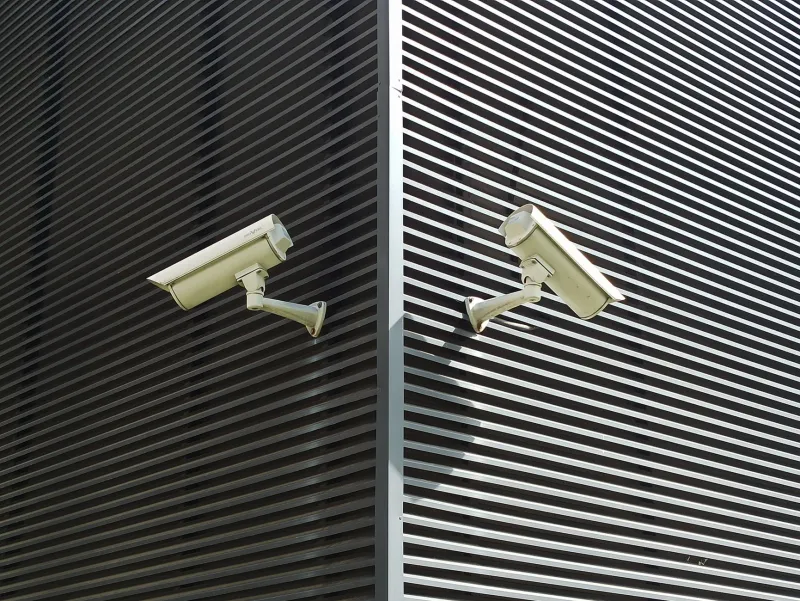
There's a specific kind of discomfort that's hard to name. You're at home, in your favorite chair, watching a virtual event on your laptop. The speaker is engaging, the production is solid, and yet something feels slightly off — like someone's standing just outside your peripheral vision. You can't see them, but you know they're there.
That feeling isn't paranoia. It's intuition working correctly.
The Illusion of Private Space
When you walk into a concert venue or a conference center, the social contract is obvious. You're in a public space. You've agreed, implicitly, to be seen. Security cameras are visible. Staff are present. The boundaries are clear.
Your living room operates under a completely different set of assumptions. It's your space — the place where you're supposed to be most yourself, most unguarded. So when a virtual event platform sits inside that space, it creates a category mismatch that your brain registers as uncomfortable, even when you can't articulate exactly why.
"There's a real psychological cost to collapsing the boundary between private and public space," says one behavioral researcher who studies digital environment design. "When your home becomes a venue, your nervous system doesn't necessarily get the memo that you've chosen this."
And that's just the psychological layer. The technical layer is where things get genuinely complicated.
What the Platform Knows That You Don't
Every time you log into a virtual event, you're generating data. That part most people understand at a surface level — yes, platforms collect information, sure, whatever. But the specificity of what gets collected during virtual event attendance is something most attendees would find surprising.
Beyond basic account information, platforms can track exactly which sessions you attended and for how long. They can see when you paused, rewound, or skipped content. Some platforms use attention-tracking tools that monitor whether your browser window is in focus. More advanced systems can analyze engagement patterns to infer emotional responses — how long you lingered on a particular segment, when your interaction dropped off, what triggered a click.
In aggregate, this creates a behavioral portrait that's far more detailed than anything a traditional venue could ever compile. The stadium doesn't know you left at halftime. The virtual platform absolutely does.
"The data collected during a two-hour virtual event can be more personally revealing than months of passive browsing," notes one cybersecurity consultant who works with event technology companies. "People don't realize they're not just watching — they're being watched watching."
The Camera Problem Nobody Wants to Talk About
For events that require webcam participation — virtual conferences, interactive workshops, hybrid networking sessions — the exposure goes even deeper. Participants aren't just generating behavioral data; they're literally putting their homes on camera.
Background details reveal income levels, family status, geographic location, and personal interests. Lighting conditions can expose health information. The presence of other people in the background — children, partners, roommates — extends the data collection to individuals who never consented to participate.
Most platform terms of service are written to be technically accurate but practically incomprehensible to the average user. The result is that people click "agree" on documents that grant sweeping permissions to video and audio data without any real understanding of what they've authorized.
Some platforms have begun addressing this with features like blurred backgrounds and automatic audio muting. But these are opt-in solutions to what is, at its core, an opt-out problem. The default settings on most major platforms favor data collection over privacy protection.
The Targeting That Follows You Home
Attending a virtual event doesn't just generate data that lives on the platform. It feeds into broader advertising and behavioral targeting ecosystems that follow you across the internet long after the stream ends.
If you attend a virtual fitness conference, don't be surprised when your social media feeds suddenly populate with supplement ads and gym equipment. If you log into an online financial seminar, expect mortgage and investment product targeting to intensify. The connection between virtual event attendance and subsequent ad targeting is direct, documented, and largely invisible to the people it affects.
This is the privacy paradox in its clearest form: the more convenient and accessible an event is, the more data it generates, and the more of yourself you inadvertently hand over in exchange for that convenience.
What Responsible Platforms Should Be Doing
The good news is that this isn't an unsolvable problem. Privacy-forward design choices exist — they just require platforms to prioritize user protection over data monetization, which is admittedly a significant ask in the current business environment.
Minimum viable data collection — gathering only what's necessary to deliver the event experience — is a technically achievable standard that very few platforms currently meet. Transparent, plain-language disclosure of exactly what data is collected and how it's used would go a long way toward restoring trust. Meaningful opt-out mechanisms, not buried in settings menus but presented clearly at the point of registration, would give attendees actual agency.
Some smaller, community-focused platforms are building their reputations on exactly these commitments. As virtual events become a permanent fixture of American cultural life rather than a pandemic-era workaround, the platforms that treat privacy as a feature rather than an afterthought may find themselves with a significant competitive advantage.
Reclaiming Your Space
Until the industry catches up, there are practical steps attendees can take. Using a virtual background or a purpose-set filming location rather than your actual living space limits environmental data exposure. Attending events through privacy-focused browsers or VPN connections reduces behavioral tracking. Reading — or at least skimming — the data collection sections of terms of service before registering gives you a clearer picture of what you're agreeing to.
None of these are perfect solutions. But they're a start — a way of reasserting some control over the boundary between your private space and the digital stage you've invited into it.
The couch should feel like yours. Making sure it stays that way is worth the effort.