Five Seconds of Nothing: Why Silence Hits Harder When You're Watching a Screen
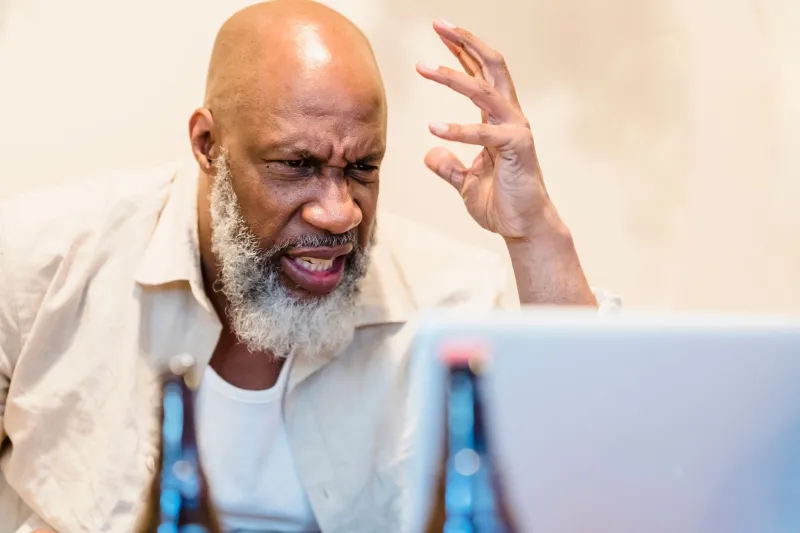
Picture this: you're tuned into a virtual event, everything's rolling smoothly, and then — nothing. The audio cuts. The video freezes. Maybe you see the presenter's face locked in a half-blink. Five seconds pass. Then ten. Your stomach does a little drop, your hand instinctively reaches for the refresh button, and you start wondering if it's your Wi-Fi or theirs.
That feeling? It's not just mild annoyance. For a lot of viewers, it registers somewhere between unsettling and genuinely stressful. And the wild thing is, the same pause in a physical venue — a speaker losing their train of thought, a band stopping to retune — barely registers at all. So what's going on?
Your Brain Expects the Internet to Be Perfect
Here's the core of the problem: when you walk into a live venue, you bring a whole set of expectations shaped by decades of real-world experience. You know performers are human. You can see the room, feel the energy, watch other audience members react. There's ambient noise — shuffling, murmuring, the hum of the lights. Silence in that context is just another texture in the experience.
Online, though, your brain has been conditioned by years of Netflix, Spotify, and YouTube to expect seamless, instant delivery. Streaming platforms have spent billions of dollars engineering out every stutter and hiccup. So when a virtual event pauses unexpectedly, your brain doesn't read it as a human moment — it reads it as a system failure. And system failures trigger a low-grade alarm response.
Researchers who study media psychology call this the "expectation gap," and it's particularly sharp with live-streamed content. You're watching something that's supposed to be happening right now, which means any disruption feels like you're missing the real thing — even if the pause is only a few seconds long.
The Performer Feels It Too
If you think dead air is rough from the viewer's seat, spare a thought for whoever's on camera. Presenting or performing to a live audience gives you instant feedback — applause, laughter, visible attention. Online, that feedback loop is already stripped down to a comment section or a wave of emoji reactions. When silence hits on top of that, performers often describe it as talking into a void.
A lot of experienced speakers and entertainers say that a technical glitch during a virtual event rattles them more than almost anything that could go wrong on a physical stage. Part of that is the loss of control — you can't read the room, you can't make eye contact with someone in the front row to steady yourself. You're just sitting with the uncertainty, waiting to find out if anyone's still there.
This is why performer confidence during virtual events is so tied to the technical environment. A rocky stream doesn't just inconvenience the audience — it actively chips away at the energy the person on screen is trying to project. And that dip in energy, if it happens, feeds right back to the viewers.
The Isolation Factor Makes Everything Louder
There's another layer here that's pretty specific to how most of us experience virtual events: we're usually alone, or close to it. Watching a streamed concert from your couch in Columbus or catching a virtual conference from your home office in Phoenix means there's no crowd energy to absorb the awkward moments.
In a live setting, social contagion does a lot of heavy lifting. If the person next to you laughs or applauds, you're pulled along. If the room stays calm during a technical hiccup, you stay calm too. Watching alone, you don't have that buffer. Every glitch lands directly on you, unfiltered.
This is part of why online audiences tend to be quicker to disengage. It's not that they're less loyal — it's that the psychological cost of sitting through discomfort is higher when there's no social experience softening the edges.
What Smart Event Producers Are Doing About It
The good news is that this isn't just a problem to endure — it's one that can be actively managed, and a growing number of virtual event producers are getting really creative about it.
Normalize it before it happens. Some of the smoothest-running virtual events open with a quick, casual acknowledgment that tech can be unpredictable. When a host says upfront, "Hey, if we freeze for a second, just hang tight — we'll be right back," it reframes any future glitch as expected rather than alarming. That one sentence does a surprising amount of psychological work.
Fill the silence intentionally. Dead air is almost always worse than imperfect audio. Smart producers keep a playlist of ambient music, branded content, or even a simple animated holding screen ready to drop in the moment something goes sideways. It signals that someone's in control, even when the technical situation is briefly out of hand.
Coach your presenters. Performers and speakers who've been briefed on how to handle glitches — with a calm joke, a relaxed pause, a simple "we'll be right back" — project a confidence that carries the audience through the moment. The ones who visibly panic or go silent themselves amplify the discomfort for everyone watching.
Build in breathing room. Tightly packed virtual event schedules leave no margin for recovery. Events that build intentional buffer time between segments can absorb a technical hiccup without everything falling apart. A few extra minutes of planned downtime is a much better look than a frantic scramble.
Use chat actively. Keeping the audience talking in the chat or comment section during a glitch is underrated. A host who says "while we sort this out, drop your location in the chat" turns a potential disaster into a moment of community. Suddenly the audience is doing something, and that activity keeps engagement alive.
Reframing the Pause
Here's the bigger picture takeaway: the awkwardness of online silence isn't really about the silence itself. It's about unmet expectations and missing context. When we understand that — as viewers, as performers, as producers — we can start to build virtual events that account for human imperfection rather than pretending it won't show up.
The best virtual experiences aren't the ones where nothing goes wrong. They're the ones where the people running the show have thought through what to do when something does. A five-second freeze handled with grace can actually build audience trust — it's proof there's a real, responsive human on the other side of the stream.
And honestly? That's pretty close to what makes live events feel alive in the first place.