They Logged On Reluctantly. They Never Logged Off.

Photo by Photo by Akshay Chauhan on Unsplash on Unsplash
Nobody's origin story starts with "I always dreamed of performing for a camera in my spare bedroom." For most creators, the path to digital wasn't a vision — it was a detour that turned into a destination.
The stories that follow aren't about people who saw the future coming and positioned themselves perfectly. They're about people who stumbled into something true about themselves by accident, in circumstances they wouldn't have chosen, on a medium they initially dismissed. And they're more instructive for it.
"I Thought It Would Be Smaller. It Was the Opposite."
Marcus had been doing stand-up comedy in mid-sized venues across the Midwest for eleven years when he reluctantly agreed to do a virtual set for a comedy festival that had moved online. He spent the week before the show dreading it.
"I kept thinking, what's the point? You can't feel the room. Half of comedy is the room," he says. "I almost canceled three times."
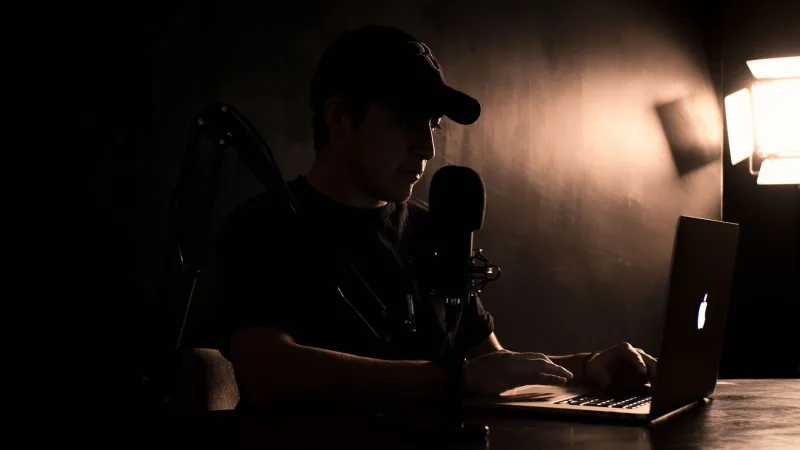
He didn't cancel. And the set — performed to a live stream audience he couldn't see, in a spare bedroom with a ring light he'd borrowed from his wife — reached more people than any show he'd ever done. Not because the platform was magical, but because the absence of a physical room forced him to change something fundamental about his delivery.
"When you can't play off the energy of the crowd, you have to actually trust the material," he explains. "I stopped doing crowd work as a crutch and started writing tighter. The virtual show made me a better comedian for live shows too."
He's now running a monthly virtual comedy series with a paid subscriber base that funds his touring. The digital platform didn't replace his live career. It subsidized it — and in the process, sharpened it.
The Speaker Who Found Her Real Audience Online
Denise had built a solid regional reputation as a corporate keynote speaker. She worked the conference circuit in the Southeast, got solid reviews, and made a comfortable living. When in-person events dried up, she moved her talks online expecting a temporary inconvenience.
What she found instead was an audience she didn't know she had.
"In-person keynotes, you're talking to whoever the company decided to put in that room," she says. "Online, people choose to show up. They're there because they actually want to be there. That changes everything about the dynamic."
Her first fully virtual talk generated more direct messages and follow-up engagement than her previous three years of in-person speaking combined. She started a virtual workshop series. Then a membership community. Then a podcast. The throughline was always the same content she'd been delivering in hotel ballrooms — but the medium stripped away the formality and let her personality come through in ways that a lectern and a slide deck never had.
"I used to spend so much energy trying to project across a big room," she says. "Online, I just talk. It turns out talking is what I'm actually good at."
When the Stage Disappears, What's Left Is the Real You
There's a pattern in these stories that's worth sitting with. Again and again, creators describe the virtual format as a kind of stripping away — of staging, of physical presence as a performance tool, of the ambient energy that traditional venues provide.
For some, that stripping away feels like loss. For others, it turns out to be clarifying.
Jordan, a visual artist who had built a career around gallery shows and live painting events, started doing virtual studio sessions during 2020 largely to stay sane. He'd set up a camera over his workspace and stream himself painting, talking through his process, answering questions from viewers in real time.
"A gallery show is about the finished work," he says. "Virtual completely flipped that. People were watching me make mistakes, change my mind, paint over things. They loved the process more than the product."
That insight transformed how he thinks about his work. He still does gallery shows. But the virtual studio sessions — which now draw consistent audiences and generate revenue through memberships and commissioned pieces — have become the center of his creative life. Not because they're more lucrative, but because they're more honest.
"The gallery is where I present myself," he says. "The stream is where I actually am."
The Turning Point Is Usually a Comment
Ask enough creators about the exact moment they stopped resisting digital and started embracing it, and a specific kind of story emerges with surprising consistency. It's rarely a revenue milestone or a viral moment. It's usually a comment.
A message from someone who says the virtual session helped them through a hard week. A question from an attendee in a time zone that would never have put them in the same room as the creator. A piece of feedback that reveals a depth of engagement no post-show handshake could convey.
For Denise, it was a message from a woman in rural Montana who said she'd been trying to attend one of Denise's talks for three years but could never afford the travel. "She drove an hour to a library to watch on a decent internet connection," Denise says. "I cried reading that. I thought, this is who I was leaving out."
That realization — that the physical constraints of traditional formats were access constraints, not just logistical ones — is perhaps the most transformative thing virtual platforms have offered creators willing to pay attention.
Digital Isn't a Fallback. It's a Different Instrument.
The creators who've genuinely thrived in virtual formats share one key shift in thinking: they stopped comparing digital to in-person and started treating it as its own thing — a different instrument that rewards different skills and enables different kinds of connection.
A trumpet player doesn't wish they were a piano. They learn what the trumpet does that nothing else can.
Virtual events, at their best, do things that no physical venue can replicate: they collapse geography, they create archives, they enable intimacy at scale, they generate community across time zones. They also demand things that physical stages don't — directness, consistency, a willingness to be seen without the buffer of a crowd between you and your audience.
The creators who logged on reluctantly and never logged off are the ones who figured that out — not by planning for it, but by stumbling into an accidental truth about where their work actually lives.
Sometimes the detour is the destination.