Always On, Never Present: How Digital Event Anxiety Is Stealing Your Enjoyment

Remember when missing a concert just meant you missed a concert? You couldn't get tickets, or the show sold out, or life got in the way — and that was kind of it. You heard about it from friends the next day, maybe caught a grainy YouTube clip, and moved on. There was a natural ceiling on how bad the FOMO could get.
Virtual events blew that ceiling clean off.
Now, missing something online doesn't feel like bad luck. It feels like a choice — and somehow, that makes it so much worse. When a digital event is theoretically accessible to anyone with a Wi-Fi connection, opting out (or even just falling behind) carries a weird weight that a sold-out stadium show never really did. Welcome to the notification trap.
The Difference Between Missing Out and Knowing You Could Have Been There
Traditional FOMO had a built-in escape hatch: scarcity. If the venue only held 20,000 people and you weren't one of them, there was a clean excuse. The digital world yanked that away. Online events, virtual conferences, and live streams can technically host unlimited attendees, which means the only thing standing between you and being "there" is your own decision not to show up.
Psychologists who study regret have long noted that acts of omission — things we chose not to do — tend to sting more than circumstances beyond our control. Skipping a virtual event isn't like missing a flight. It's closer to ignoring an open invitation. And your brain, unhelpfully, keeps score.
Add social media into the mix and you've got a feedback loop that would make a slot machine designer proud. Within minutes of a major virtual event kicking off, Twitter (or X, or whatever we're calling it this week) lights up with reactions, screenshots, and hot takes. Instagram fills with people sharing their "watch party" setups. Discord servers explode with commentary in real time. Even if you decided to sit this one out, the internet will not let you forget what you're missing — and it'll remind you roughly every four minutes.
The Multi-Stream Pressure Cooker
Here's where virtual event anxiety gets genuinely weird: even people who are attending often don't feel present. Because the digital landscape doesn't offer one stage — it offers dozens.
A major virtual festival might run simultaneous stages across multiple platforms. A big gaming convention could have keynotes, developer panels, and fan meetups happening at the exact same time. A virtual conference might offer 15 breakout sessions scheduled back-to-back with no travel time required — which sounds like a gift until you realize you're now expected to pick between all of them with zero margin for error.
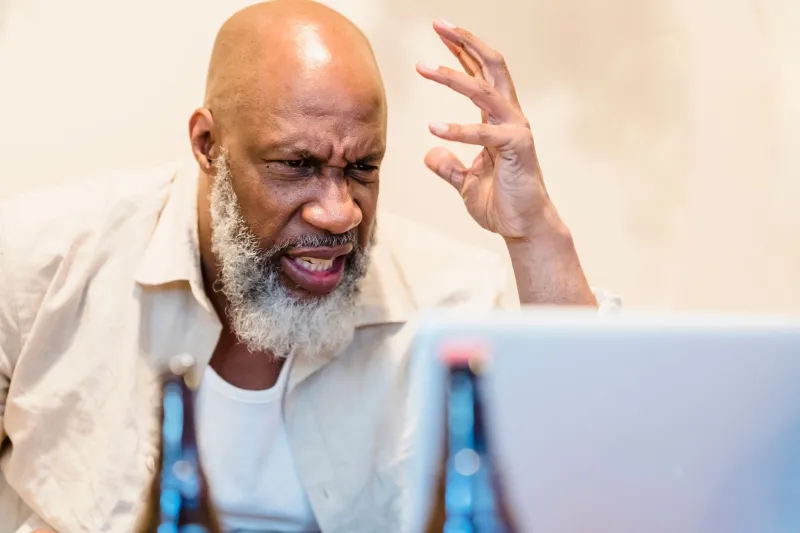
The result is a kind of paralysis. Attendees spend half their energy watching the event and the other half refreshing the schedule, monitoring social chatter about the other sessions they're not in, and quietly panicking that the most important thing is always happening somewhere else on the platform. It's less like watching a show and more like trying to win a game where the rules keep changing.
This isn't just anecdotal. Research on attention and digital multitasking consistently shows that attempting to monitor multiple streams simultaneously degrades the quality of engagement with all of them. You end up half-present everywhere and fully present nowhere — which, ironically, is the worst possible outcome for an event you actually wanted to attend.
Notifications as Anxiety Architects
Let's talk about the little red bubbles for a second.
Platform notifications are designed — very deliberately — to create urgency. "The keynote is starting NOW." "You're missing the live Q&A." "Only 10 minutes left to catch the replay." Each ping is a tiny prod that says: something is happening and you are not part of it yet.
For virtual events specifically, notifications serve a legitimate purpose. Reminders help people actually show up. But when you're subscribed to multiple events across multiple platforms, and each one is firing alerts on its own schedule, the cumulative effect is less "helpful reminder" and more "low-grade emergency siren running in the background of your day."
Over time, that background noise doesn't just cause stress during events — it starts to color the time between them. You begin to feel like you should always be checking, always be ready, always be on deck. The line between leisure and obligation gets uncomfortably blurry.
Reclaiming Your Headspace Without Missing Everything
Okay, so virtual event culture has a FOMO problem. That doesn't mean you have to either suffer through the anxiety or swear off digital events entirely. There's a middle path, and it starts with being intentional in a way that the old concert-ticket model never required.
Curate, don't collect. The temptation is to register for everything that sounds interesting and sort it out later. Resist that. Pick two or three events per month that genuinely matter to you and treat everything else as optional. You'll actually enjoy what you attend.
Mute the meta-chatter during the event. Social media commentary on a live event is designed to pull your attention sideways. If you're watching something you care about, close the timeline. The tweets will still be there when it's over. Your experience of the event, if you fragment it, will not.
Audit your notification settings aggressively. Most platforms let you customize exactly which alerts you receive and when. Take 20 minutes to go through them. If a notification isn't genuinely useful, turn it off. Your nervous system will thank you.
Give yourself permission to miss things. This one sounds obvious but it's harder than it seems. Not every event needs your attendance. Not every live stream needs your eyes. The digital world will generate more content tomorrow, and the day after, and every day after that. Scarcity is gone — which means the only thing you can actually protect is your attention.
Use replays without guilt. A lot of virtual events offer replay access, and there's absolutely nothing wrong with watching something on your own schedule. The live experience has its own energy, sure — but a focused replay beats a distracted live viewing every single time.
The Event Is Not the Point
Here's the thing about virtual events that gets lost in the anxiety spiral: the whole reason they exist is to connect you with something you love. A performer, a speaker, a community, an idea. When the pressure to "keep up" starts drowning out the actual experience, the event has failed at its core job — and so have you as an audience member.
The digital stage is genuinely extraordinary. From your couch in Columbus or your apartment in Austin, you can access world-class performances, conversations with brilliant minds, and communities of people who care about exactly the same weird niche things you do. That's not nothing. That's kind of remarkable.
But all of it requires you to actually show up — mentally, not just with a browser tab open. And you can't do that if you're spending every event half-watching the clock and half-scrolling to see what else you're missing.
Log in. Close the other tabs. Let the thing be the thing.
The notifications will still be there when it's over.