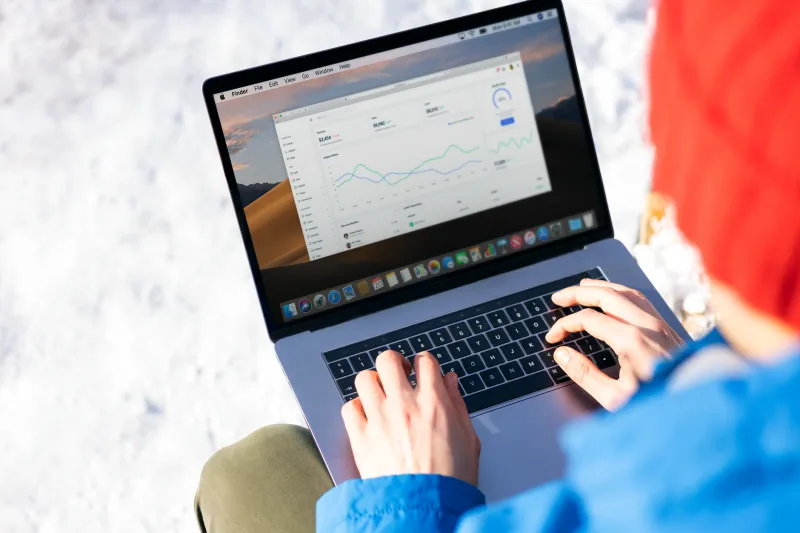
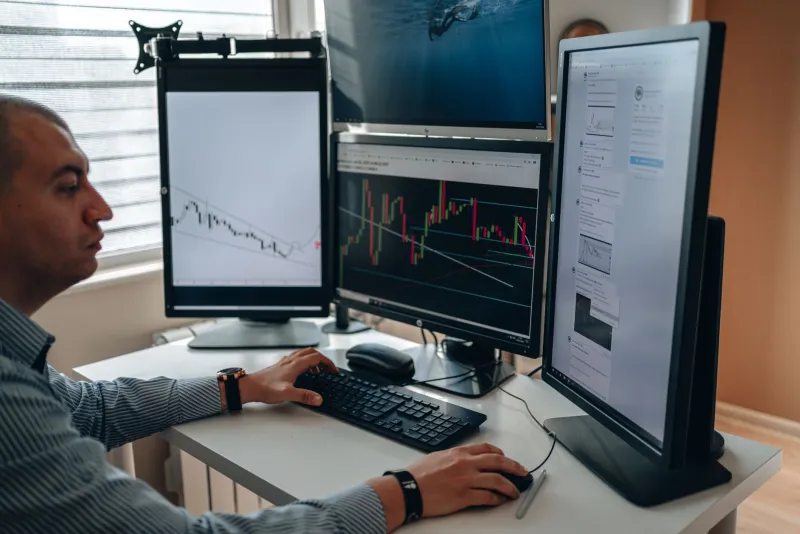
The Illusion of One: How Virtual Events Trick Your Brain Into Thinking It's Just You and the Performer
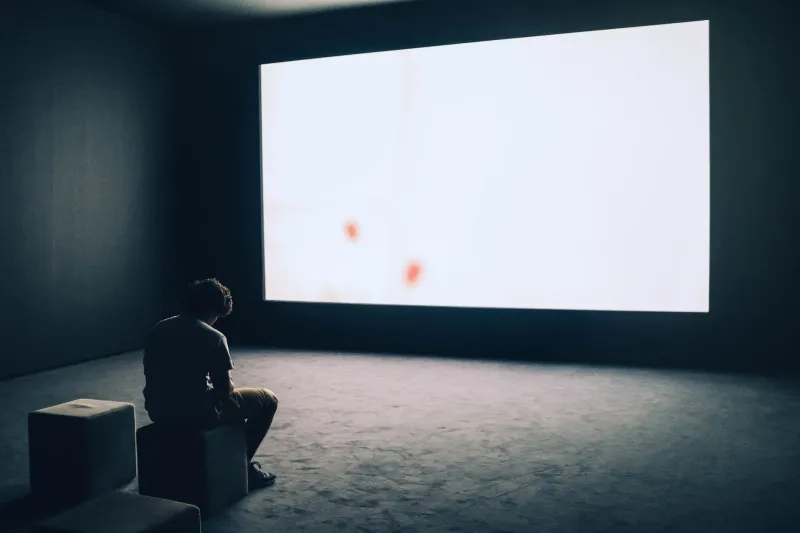
It happens fast. The stream kicks off, the performer leans slightly toward the camera, maybe cracks a self-deprecating joke about their home office setup, and something in your brain quietly decides: they're talking to me. Not at a screen. Not into a void. To you, specifically, in your specific living room, on your specific couch.
And then the chat explodes with 47,000 simultaneous reactions, and the spell — briefly — breaks.
This is the intimacy trap. And if you've attended more than a handful of virtual events over the past few years, you've almost certainly fallen into it. The weird part? Knowing it's an illusion doesn't actually make it stop working.
Why Your Brain Defaults to One-on-One
Here's the thing about how human beings are wired: we did not evolve for broadcast media. For most of human history, if someone was looking directly at you and speaking in a conversational tone, they were talking to you. That's it. There was no audience of tens of thousands silently receiving the same signal.
So when a performer stares into a camera lens — which, on your end, reads as direct eye contact — your brain activates the same social processing it would use during an actual conversation. You start filling in the blanks. You read micro-expressions. You feel like you're being seen, even when you're entirely invisible to the person on screen.
This isn't a bug in your cognition. It's a deeply human feature that virtual events have learned to exploit with remarkable precision.
The Staging Is Not an Accident
The cozy bookshelf in the background. The slightly-too-casual hoodie. The "oh, I didn't realize we were starting" energy that opens so many virtual keynotes and performances. None of that is accidental.
Organizers and talent coaches have spent years reverse-engineering the visual language of intimacy. A tighter camera frame mimics the physical closeness of a private conversation. Warm lighting evokes the feeling of sitting across from someone at a coffee shop rather than watching a produced stage show. Even the slight imperfections — a pet wandering through the shot, a notification sound in the background — are sometimes deliberately left in because they signal realness, and realness signals proximity.
The formula works because it taps into something audiences genuinely want: to feel like they matter to the person they're watching. And in a world where most digital interaction is mediated, asynchronous, and emotionally flat, that manufactured warmth hits surprisingly hard.
The Shatter Moment
But there's always a shatter moment. It might be the viewer counter ticking past 50,000. It might be the comment you typed getting buried under a thousand identical responses before anyone could possibly read it. It might be the realization that the "personalized" email you got before the event was sent to approximately 200,000 other registrants with your name auto-filled at the top.
Suddenly the performer isn't leaning toward you anymore. They're leaning toward a camera that feeds into a server that distributes identical video packets to a mass of strangers who are all, simultaneously, having their own private version of the same moment.
That's a genuinely strange thing to sit with. You weren't having a shared experience — you were each having a parallel one. Fifty thousand people, alone together, each briefly convinced they were the intended recipient of something that was never actually addressed to any individual at all.
Why We Keep Falling For It Anyway
Here's what makes this particularly fascinating: audiences know. Most regular virtual event attendees are fully aware, on some rational level, that the performer cannot see them, that the chat is a firehose nobody is reading, that the "community" they're part of is really just a demographic segment with a shared calendar invite.
And yet the illusion still lands. Every single time.
Part of this is the sheer power of the visual cues — the brain's social processing runs faster and deeper than conscious awareness, so the feeling of connection often arrives before the logical counterargument can catch up. But part of it is also something more honest: people want it to be real. The desire for genuine connection is so strong that a convincing approximation is often good enough, at least in the moment.
There's also a kind of willing suspension of disbelief at play — the same mechanism that lets you cry at a movie even though you know the characters aren't real. You're not being naive. You're choosing, on some level, to let the feeling in because the alternative is to watch everything from behind glass.
What Organizers Owe Their Audiences
None of this means virtual events are inherently manipulative or that the intimacy they create is worthless. Connection that feels real often functions as real, and there's genuine value in a well-produced virtual experience that makes 50,000 people feel seen, even briefly.
But there's a line between leveraging the medium's natural strengths and cynically manufacturing closeness to mask a hollow product. The difference usually shows up in what comes after the stream ends — whether the organizer has built actual infrastructure for follow-up, genuine community interaction, and real responsiveness, or whether the "personal" vibe was just a conversion tactic wrapped in a cozy aesthetic.
Audiences are getting sharper about this distinction. After a few years of high-volume virtual event consumption, people have developed a pretty good radar for when the warmth is genuine versus when it's a production choice made in a pre-show strategy meeting.
The Intimacy You Actually Get to Keep
For all its contradictions, the virtual event format does offer something real that in-person events rarely can: the ability to be genuinely present, on your own terms, without the noise and logistics of a physical venue filtering the experience.
You might be one of 50,000 people watching the same feed. But you're watching it from your space, at your pace, with your full attention (or whatever fraction of it you're willing to give). The connection you build with a performer over dozens of virtual appearances — following their work, engaging with their content, showing up consistently — is real, even if any single event is a mass broadcast.
The trick is knowing the difference between the illusion the platform is selling and the relationship you're actually building. One is a camera angle. The other is yours to keep.
So the next time a performer leans into their camera and it feels like they're talking directly to you — they kind of are. Just to you, and also to everyone else, all at once. Welcome to the front row. There are a lot of us here.